FHN
FHN 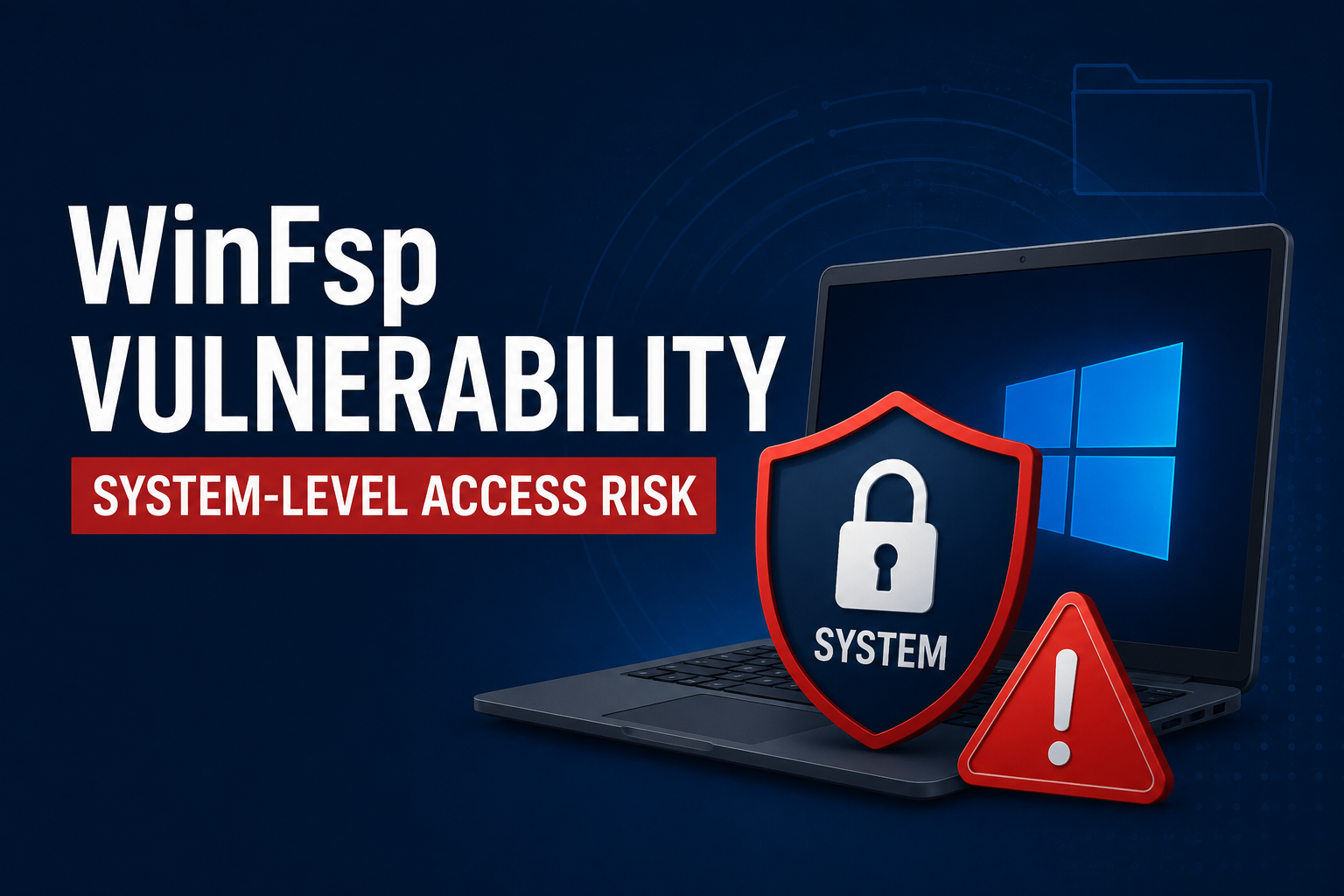
A recently identified security flaw in WinFsp could allow attackers with local access to elevate their privileges and gain SYSTEM-level control of affected Windows machines. The vulnerability, tracked as CVE-2026-3006, impacts WinFsp 2.1.25156 and earlier, and has been addressed in a newer release.
Although the vulnerability cannot be exploited remotely, it poses a significant risk because attackers often use privilege escalation flaws after initially compromising a system.
How the Vulnerability Works
WinFsp is an open-source framework that enables Windows applications to create and use custom file systems. It is commonly integrated into software that provides virtual drives, cloud storage access, and other file-system virtualization features.
According to security researchers, the flaw is caused by a synchronization issue within the WinFsp driver. By exploiting this weakness, an attacker can trigger memory corruption inside the Windows kernel. If the attack is successful, the attacker can elevate their privileges from a standard user account to the highly privileged SYSTEM account.
With SYSTEM privileges, an attacker may be able to install malicious software, disable security tools, create new administrator accounts, modify protected files, or maintain long-term access to the compromised device.
Protecting Windows Systems
The issue has been fixed in the latest WinFsp release, and organizations should ensure all affected systems are updated without delay.
Security teams should also:
- Upgrade to the latest WinFsp version.
- Check whether third-party applications include vulnerable WinFsp components.
- Limit local administrator privileges wherever possible.
- Monitor for unusual driver, service, or privilege escalation activity.
- Investigate unexpected processes interacting with WinFsp.
- Keep Windows and endpoint security solutions fully updated.
Privilege escalation vulnerabilities like this are commonly used as part of multi-stage attacks. While they require an attacker to already have some level of access, they can significantly increase the impact of a compromise by allowing attackers to bypass security controls and gain complete control of a Windows system.
About the Author