FHN
FHN 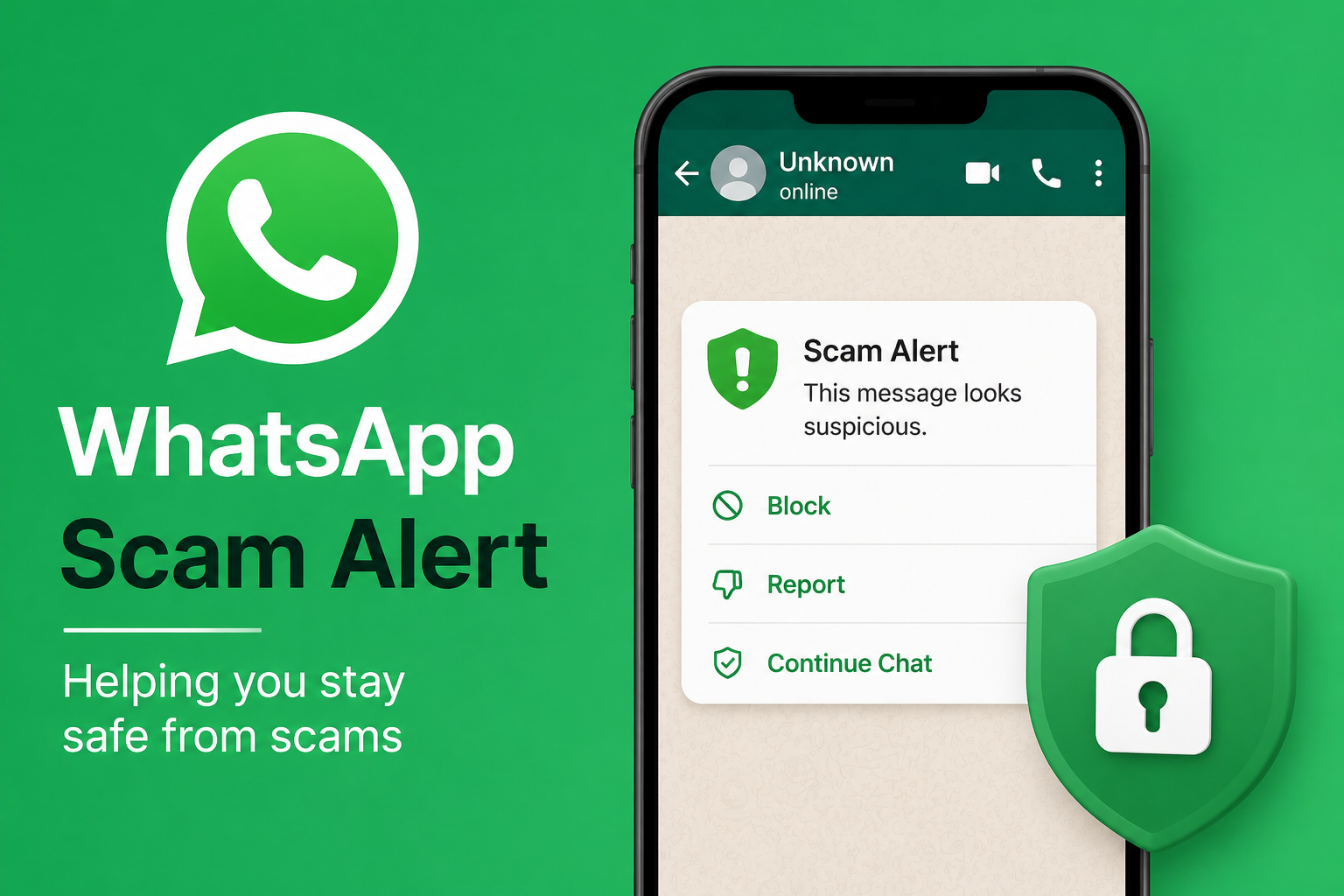
WhatsApp has introduced a new optional feature called Scam Alert to help users identify potentially fraudulent messages while keeping its end-to-end encryption intact.
The feature is designed to address the growing use of more convincing scams, including messages created with the help of AI. Instead of sending messages to WhatsApp’s servers for analysis, Scam Alert uses a small machine learning model that runs directly on the user’s device.
Once enabled, the model examines messages from people who are not saved as contacts. It looks for patterns in the conversation and language that may indicate common scam techniques.
The message itself stays on the device during this process. WhatsApp says it does not automatically send messages to Meta, WhatsApp, or another third party for review. Users decide what happens next.
If a message appears suspicious, WhatsApp can display a warning to the recipient. The user can then choose to block the sender, report the conversation, continue chatting, or mark the conversation as trusted if they believe the warning is incorrect.
Privacy Is a Key Part of Scam Alert
WhatsApp says the system was designed around three main ideas: local processing, no automatic reporting, and user control.
The company still needs some information to understand how well the feature performs. Instead of collecting individual messages, WhatsApp uses a privacy-focused analytics system that gathers limited information such as how many warnings were displayed and what actions users took.
This information is processed using Trusted Execution Environments (TEEs) and additional privacy techniques before aggregated statistics are sent to Meta.
Protecting the AI Model
Another concern is making sure attackers cannot secretly deliver a modified version of the scam-detection model to specific users.
WhatsApp says each model version is published with a SHA-256 hash in an append-only transparency system before it is deployed. This creates a record that can be used to verify that the model has not been secretly changed.
Model downloads also use an Oblivious HTTP (OHTTP) relay, which helps prevent the server from directly linking a model request to a user’s IP address.
WhatsApp says even the process used to assign users to different model versions for testing happens locally on their devices rather than being controlled by the server.
Additional Security Controls
The company says Scam Alert was designed to protect against several types of threats, including outside attackers, malicious employees, and compromised third-party suppliers.
Its security measures include isolated confidential computing environments, encrypted memory, and additional protections around the systems running the analytics infrastructure.
Users can also check information about the feature through WhatsApp’s transparency controls. The in-app activity section shows details such as which messages were analyzed and which model version was used.
External Researchers Can Test the System
WhatsApp is also expanding its Bug Bounty program to cover parts of the Scam Alert technology, including the machine learning models and analytics infrastructure.
This gives security researchers an opportunity to look for weaknesses and verify whether the system is being used only for its stated purpose of detecting scams.
Limited Beta Release
Scam Alert is initially being introduced through a limited beta rollout. WhatsApp says it plans to continue testing the technology with security researchers before making it more widely available.
The company also plans to publish a technical white paper explaining how the system works in greater detail.
The approach reflects a growing focus on building AI-powered security features without giving up user privacy. Instead of sending private conversations to the cloud for analysis, WhatsApp is attempting to combine on-device AI, confidential computing, and transparency mechanisms to detect scams while keeping message content protected.
About the Author