FHN
FHN 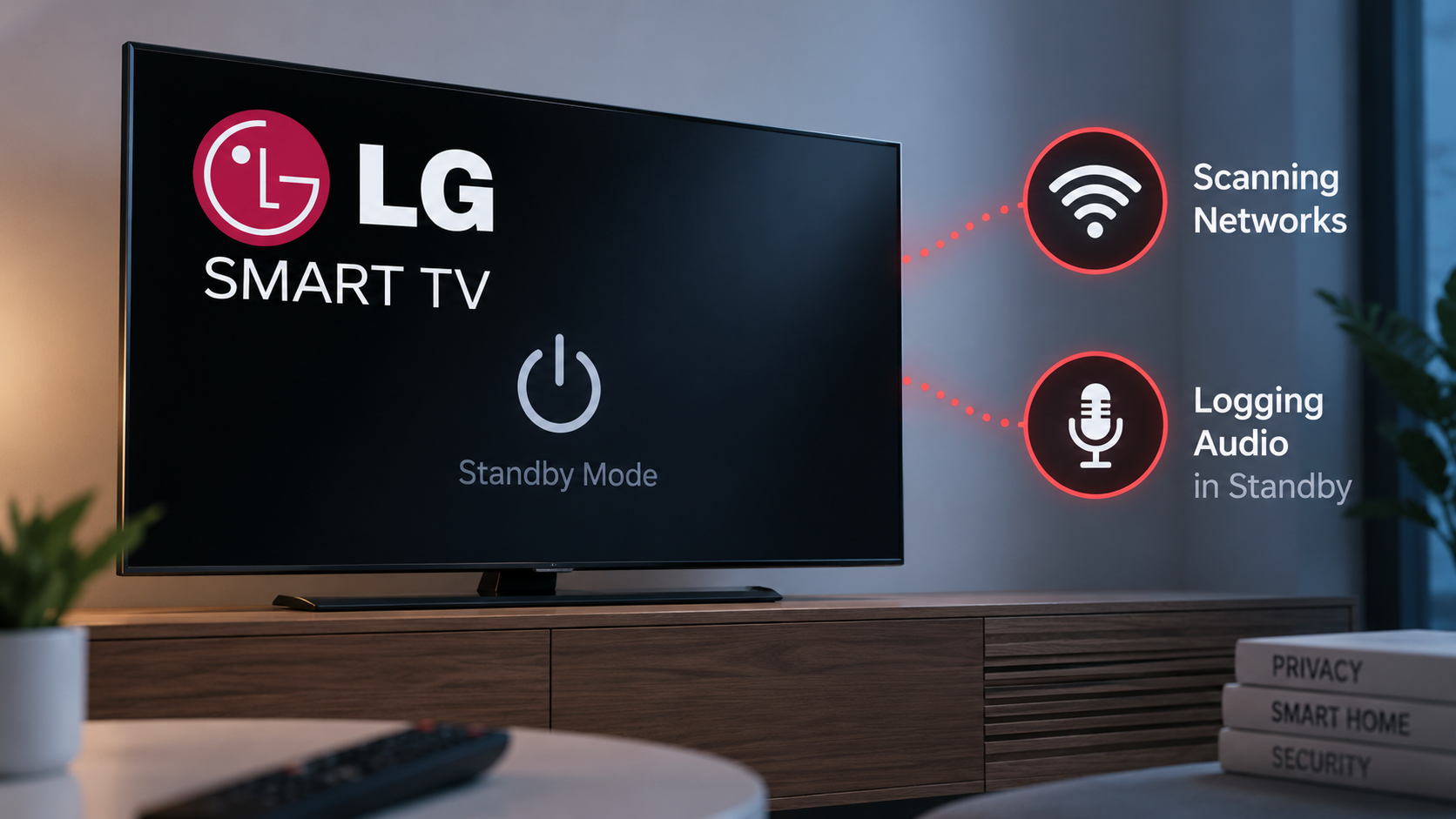
Smart TVs are designed to make entertainment easier, but a recent investigation has raised questions about what some LG televisions may continue doing when they appear to be turned off.
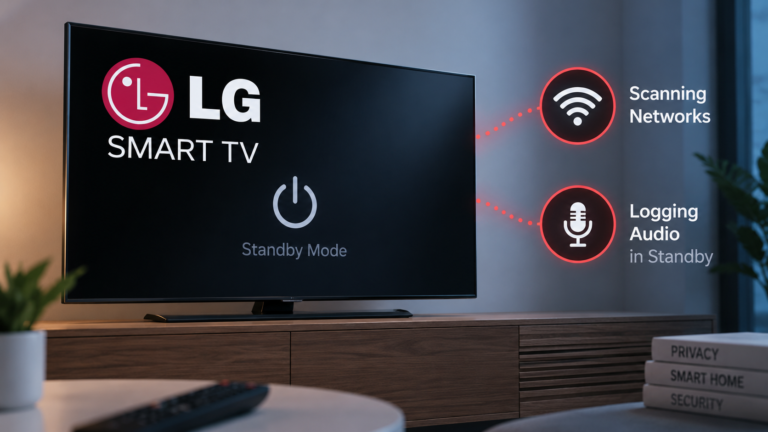
Testing by Gamers Nexus, Level1Techs, and independent researchers reportedly found that certain LG OLED models could continue scanning nearby networks and processing microphone audio while in standby mode.
The findings have raised concerns about privacy, especially because smart TVs are often used in homes, offices, hotels, and other places where sensitive conversations take place.
LG TVs Reportedly Continue Network Scanning
Researchers tested retail LG OLED televisions, including the G5 model, and used network-monitoring tools to examine their activity.
According to the investigation, the TVs were able to:
- Detect other devices connected to the local network.
- Identify nearby Wi-Fi networks.
- Record information such as Wi-Fi signal strength.
- Collect data that could help build a picture of the surrounding network environment.
Some of the detected devices reportedly included smartphones and smartwatches that were not directly involved in the testing.
This suggests that the television may be gathering information about more than just its own internet connection.
Concerns About Microphone Activity
The most serious concern involves the television’s microphone.
Researchers said they captured microphone activity while the TV appeared to be in standby mode. They also reported that some audio data remained stored on the device when network connectivity was unavailable.
When the connection was restored, the stored information was reportedly uploaded.
The investigation also showed speech being processed into text on the television, raising additional questions about how voice data is handled.
LG has previously said that its televisions do not collect, record, or store ambient conversations. The new investigation has prompted researchers to question how that statement compares with the behavior they observed during testing.
Advertising Data Raises More Questions
The investigation also looked at Automatic Content Recognition (ACR), a technology used by smart TVs to understand what content is being displayed.
ACR can provide viewing information to advertising platforms, including when content comes through external HDMI devices.
Researchers therefore raised concerns about LG televisions being used in environments such as:
- Hospitals and medical facilities
- Hotel rooms
- Corporate offices
- Conference rooms
- Homes
In sensitive locations, unexpected collection of network or audio-related information could create additional privacy risks.
What Can Users Do?
People who are concerned about their smart TV’s data collection can take some basic precautions:
- Disable the built-in microphone if the TV provides that option.
- Review privacy and advertising settings regularly.
- Turn off ACR and personalized advertising features where available.
- Disconnect the TV from Wi-Fi if internet connectivity is not required.
- Use an external streaming device instead of the TV’s built-in smart platform.
Keeping the television offline can limit the device’s ability to communicate with external services.
Why This Matters
Smart TVs are increasingly connected devices that can collect information about viewing habits, networks, and user interactions.
The latest investigation highlights an important privacy lesson: a device appearing to be off does not necessarily mean all of its connected functions have stopped.
Consumers and organizations should understand what their smart devices collect, review privacy settings, and disconnect unnecessary network access when sensitive information is involved.
About the Author