FHN
FHN 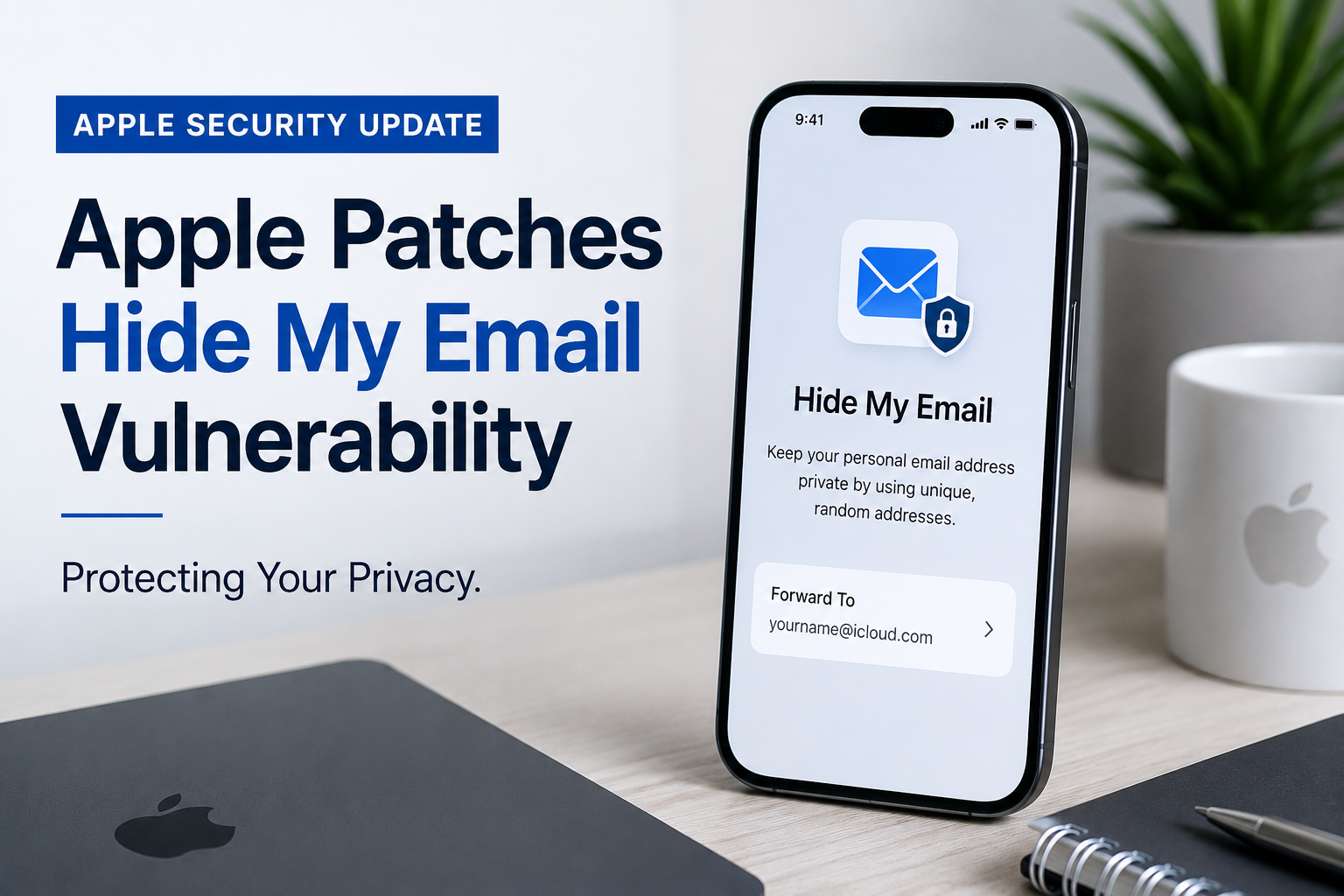
Apple has addressed a privacy vulnerability affecting its Hide My Email feature, an iCloud+ service designed to keep users’ personal email addresses private. The flaw raised concerns because it could allow an email alias to be linked back to the user’s actual email address, reducing the privacy protection the feature was built to provide. This fix reinforces the commitment to user privacy, highlighting the importance of features like Apple Hide My Email.
The issue has sparked discussions about how even privacy-focused technologies can be affected by weaknesses outside their core design.
How Hide My Email Protects Users
As part of Apple’s ongoing efforts to enhance security, the Apple Hide My Email feature continues to evolve, providing users with innovative ways to maintain their privacy online.
As part of Apple’s ongoing efforts to enhance security, the Apple Hide My Email feature continues to evolve, providing users with innovative ways to maintain their privacy online.
Hide My Email allows users to create unique email aliases whenever they sign up for websites or online services. Messages sent to these aliases are automatically forwarded to the user’s real inbox, while the actual email address remains hidden.
This approach helps users reduce spam, limit online tracking, and avoid exposing their primary email address if a service experiences a data breach.
What Went Wrong?
Although the feature successfully generated anonymous email aliases, researchers found that the email delivery process itself could unintentionally reveal the original email address.
Instead of breaking the alias directly, the weakness appeared during the way certain emails were processed. Under specific conditions, backend email handling systems could expose information that linked the alias to the user’s real address.
This meant attackers didn’t have to compromise an Apple account—they only needed to exploit the email processing workflow.
Why This Matters
Privacy tools are designed to separate a user’s identity from the services they use.
If someone can trace an anonymous email alias back to its owner, it becomes much easier to build user profiles, launch targeted phishing campaigns, or connect accounts across multiple platforms.
While the vulnerability did not expose passwords or give attackers access to Apple accounts, it weakened an important layer of privacy that many users relied on.
Apple Responds
After the issue was reported through responsible disclosure, Apple investigated the vulnerability and later released a security update to address it.
The fix prevents the conditions that allowed email aliases to be linked with real email addresses, strengthening the privacy protections offered by Hide My Email.
The update highlights Apple’s continued efforts to improve security across its ecosystem as new vulnerabilities are identified.
Can Older Aliases Still Be a Concern?
Although the vulnerability has now been patched, security experts note that information exposed before the update cannot always be erased.
Some email providers and enterprise mail systems store message logs for operational and security purposes. If an email address was previously revealed during processing, that information may still exist in archived records.
Because of this, users who created aliases before the fix may wish to review important accounts that rely on older aliases.
This incident demonstrates that protecting privacy is about more than building secure features.
Modern email systems involve multiple technologies, including spam filtering, message routing, logging services, and third-party infrastructure. Even when the main application is secure, weaknesses elsewhere in the communication process can introduce unexpected privacy risks.
Organizations developing privacy-focused services must evaluate the entire ecosystem rather than only the application itself.
Best Practices for Users
While Apple has resolved the vulnerability, users should continue following good security practices:
- Keep Apple devices updated with the latest security releases.
- Review important online accounts that use older email aliases.
- Enable Multi-Factor Authentication (MFA) wherever available.
- Be cautious of unexpected emails requesting personal information.
- Regularly monitor important accounts for suspicious activity.
Privacy tools like Hide My Email remain valuable for reducing online tracking and limiting data exposure. However, they work best when combined with strong account security and regular software updates to provide multiple layers of protection.
About the Author