FHN
FHN 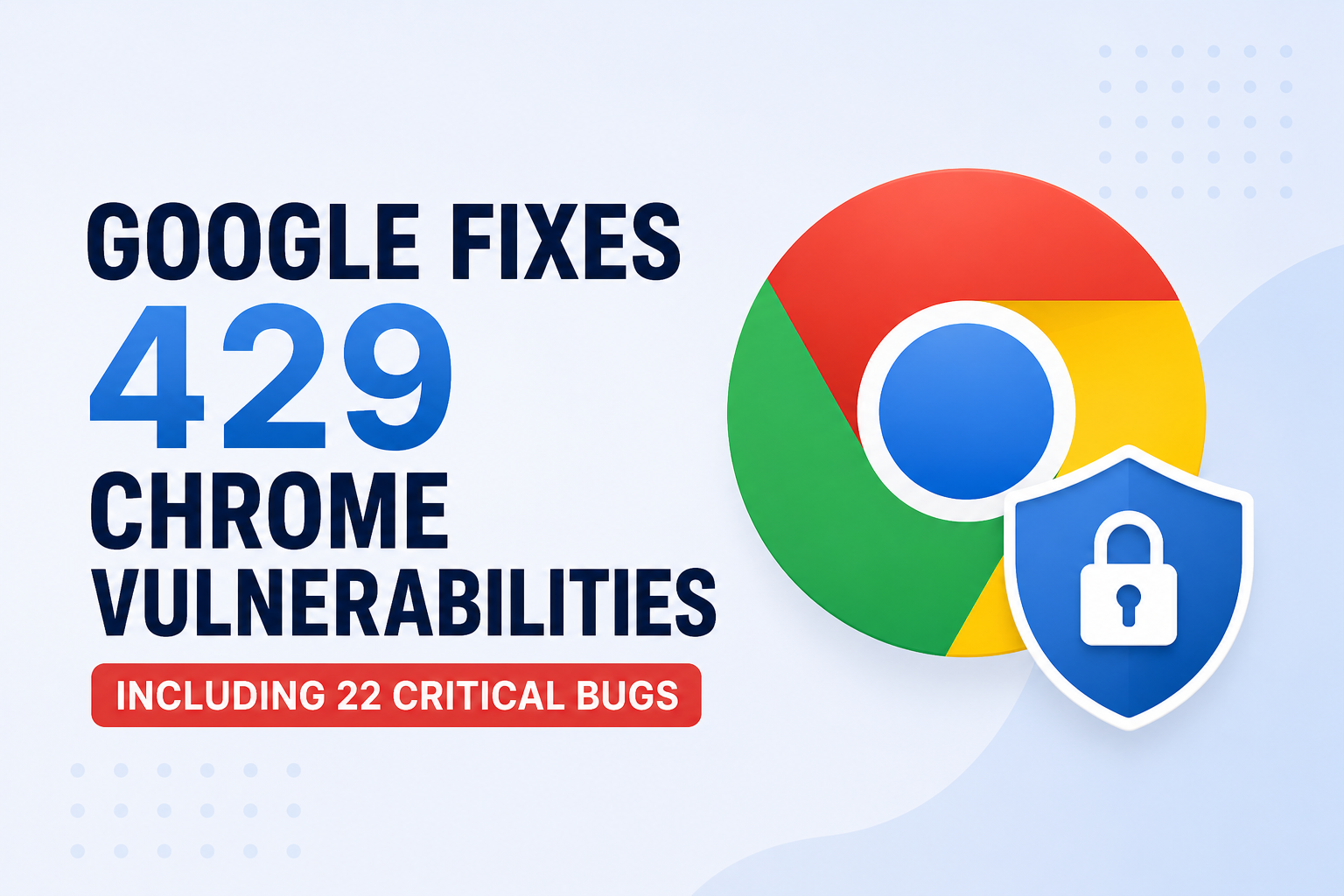
Google has released Chrome 149 for Windows, macOS, and Linux, fixing a large number of security vulnerabilities across the browser. The update addresses a total of 429 security issues, including 22 critical vulnerabilities and several other Chrome Vulnerabilities that could potentially be exploited by attackers.
The latest release includes security improvements across several Chrome components, including ANGLE, GPU, Network, Ozone, FileSystem, Password Manager, Chromecast, Cast Streaming, and Chromoting.
Given the number and severity of the fixes, users and organizations are strongly encouraged to update their browsers as soon as possible.
Critical Bugs Could Lead to Serious Attacks
Many of the critical vulnerabilities are related to memory safety issues such as use-after-free and out-of-bounds memory access errors.
These types of flaws are frequently targeted by attackers because they can sometimes be used to:
- Execute malicious code
- Crash the browser
- Bypass security protections
- Access sensitive information
- Escape browser restrictions
Several of the vulnerabilities affect Chrome’s GPU and ANGLE components, which handle graphics processing and hardware acceleration. Because these components interact closely with system hardware, they are often attractive targets for threat actors.
Google has not released full technical details for many of the vulnerabilities yet. The company commonly delays disclosure until most users have installed the updates, reducing the risk of attackers developing exploits before systems are patched.
Multiple Browser Components Affected
The security fixes span a wide range of Chrome functionality.
Affected areas include:
- ANGLE graphics framework
- GPU processing components
- Network services
- Ozone platform layer
- FileSystem functionality
- Password management features
- Chromecast services
- Cast Streaming technology
- Chrome Remote Desktop (Chromoting)
Researchers warn that vulnerabilities affecting network services, file handling, and password-related components could become particularly dangerous if combined with additional exploits.
Issues involving Chromecast and remote streaming features also highlight that browser-related risks extend beyond simple web browsing and may impact connected devices and remote-access capabilities.
Update Recommended Immediately
Google reports that many of the vulnerabilities were discovered by both internal security teams and external researchers. Some high-impact findings earned bug bounty rewards of up to $97,000.
Organizations should prioritize deploying the latest Chrome version as part of their patch management process. Regular browser updates remain one of the most effective ways to reduce exposure to web-based attacks.
The release serves as another reminder that browsers remain one of the most heavily targeted applications and require continuous security updates to defend against evolving threats.
22 Critical Vulnerabilities
| CVE ID | Severity | Vulnerability Type |
|---|---|---|
| CVE-2026-10881 | Critical | Out-of-bounds read/write |
| CVE-2026-10882 | Critical | Use-after-free |
| CVE-2026-10883 | Critical | Out-of-bounds write |
| CVE-2026-10884 | Critical | Use-after-free |
| CVE-2026-10885 | Critical | Use-after-free |
| CVE-2026-10886 | Critical | Use-after-free |
| CVE-2026-10887 | Critical | Use-after-free |
| CVE-2026-10888 | Critical | Use-after-free |
| CVE-2026-10889 | Critical | Out-of-bounds read |
| CVE-2026-10890 | Critical | Use-after-free |
| CVE-2026-10891 | Critical | Use-after-free |
| CVE-2026-10892 | Critical | Out-of-bounds write |
| CVE-2026-10893 | Critical | Use-after-free |
| CVE-2026-10894 | Critical | Use-after-free |
| CVE-2026-10895 | Critical | Use-after-free |
| CVE-2026-10896 | Critical | Use-after-free |
| CVE-2026-10897 | Critical | Out-of-bounds write |
| CVE-2026-10898 | Critical | Stack buffer overflow |
| CVE-2026-10899 | Critical | Use-after-free |
| CVE-2026-10900 | Critical | Use-after-free |
| CVE-2026-10901 | Critical | Use-after-free |
| CVE-2026-10902 | Critical | Use-after-free |
About the Author