FHN
FHN 
On March 2, 2026, Anthropic’s AI assistant Claude experienced a major global outage that disrupted users and developers worldwide.
The incident began around 11:49 UTC, when elevated error rates started affecting the claude.ai web interface and developer tools. Many organizations that rely on Claude for threat intelligence, automation, coding, and analysis experienced temporary downtime.
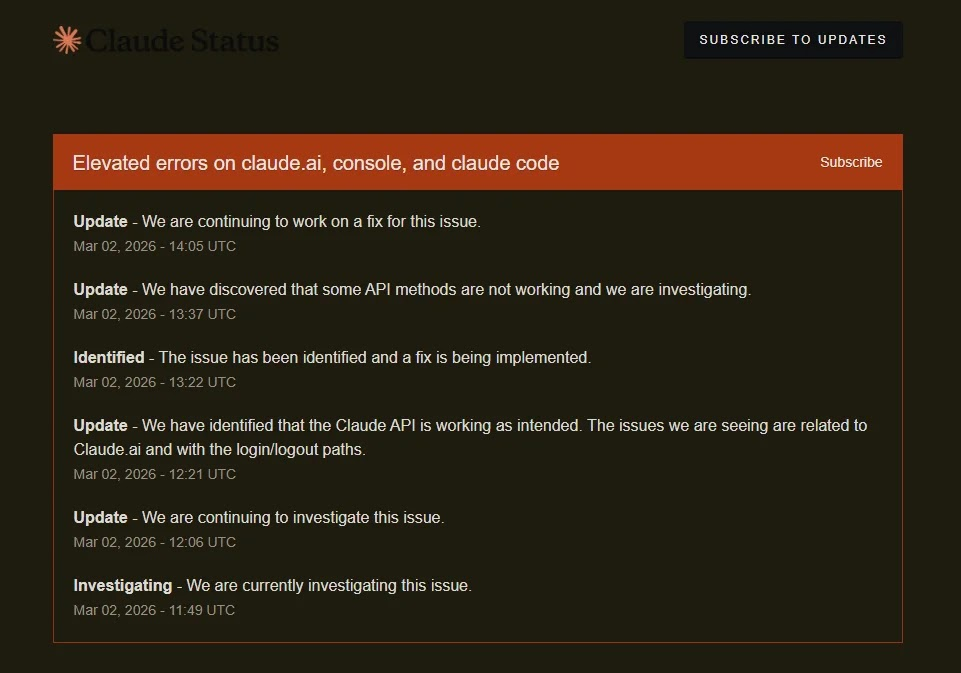
At first, engineers believed the issue was limited to login and authentication systems on the web platform. However, as the investigation continued, it became clear that several core API functions were also failing. This expanded the impact to third-party integrations and enterprise environments that depend on Claude’s APIs.
What Was Affected
The outage impacted multiple components of the Claude ecosystem, including:
- The main claude.ai web interface
- Developer console access
- API integrations used by third-party tools
- The Claude Code platform
- The Claude Opus 4.6 model (briefly affected)
By 13:22 UTC, engineers had identified the primary root cause and began deploying a fix. Later, a separate issue affecting the Claude Opus 4.6 model was discovered and resolved quickly.
During the disruption, automated systems likely encountered timeouts and HTTP 500 errors. This temporarily interrupted workflows such as prompt automation, security analysis, vulnerability scanning, and backend AI-driven processes.
Follow Us on: Linkedin, Instagram, Facebook to get the latest security news!
By 15:25 UTC, Anthropic confirmed that a comprehensive fix had been implemented and systems were placed under active monitoring.
Lessons for Organizations
This incident highlights the operational risks of relying heavily on cloud-based AI services without redundancy.
Organizations should review their API integration design and ensure they have proper error handling, fallback mechanisms, and resilience strategies in place to reduce the impact of unexpected service disruptions.
About the Author