FHN
FHN 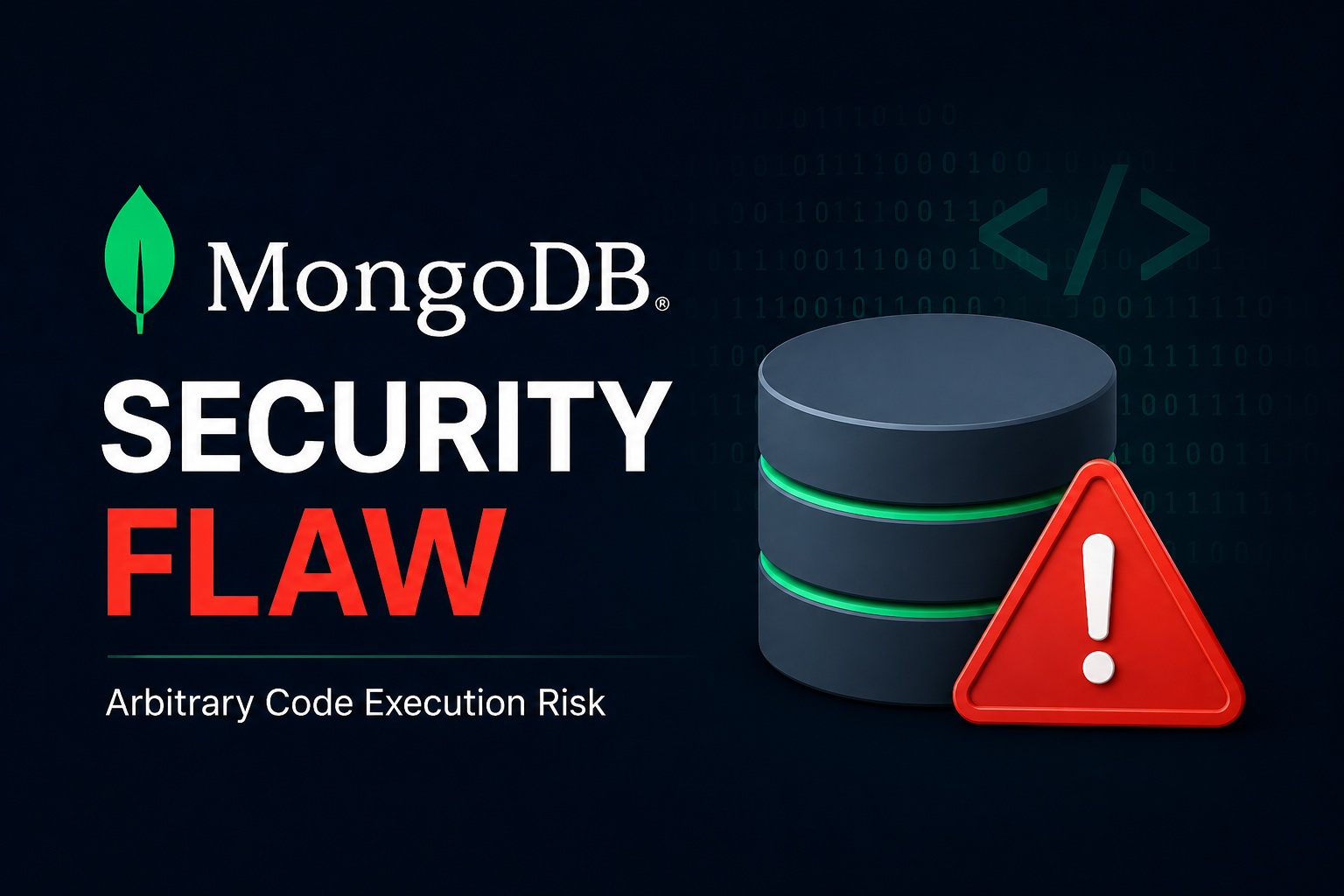
A critical vulnerability in MongoDB, tracked as CVE-2026-8053, could allow attackers to execute arbitrary code on affected database servers. This issue poses a serious risk to organizations relying on MongoDB for handling sensitive data and backend operations.
The flaw was identified during internal security testing by MongoDB and primarily impacts core MongoDB Server deployments, particularly in self-managed environments.
Technical Overview of the Vulnerability
The vulnerability enables arbitrary code execution, a class of flaws that allows threat actors to run malicious instructions directly on the host system. This effectively bypasses standard security boundaries and can grant attackers control over the database server.
Given that MongoDB often stores centralized and high-value data, exploitation of this flaw could lead to unauthorized data access, credential exposure, and system-level compromise. Attackers may also leverage the compromised host to establish persistence or pivot laterally within the network.
The issue affects MongoDB versions 5.0 and later in self-hosted deployments, where patch management depends entirely on the organization’s update practices.
Impact and Mitigation
Managed cloud users of MongoDB Atlas are not impacted, as the vulnerability has already been addressed across the platform through centralized patch deployment.
However, self-hosted environments remain exposed until updates are applied. MongoDB has released patched versions, including updates in recent release cycles such as 7.0.31, 8.0.20, and 8.2.7, to mitigate this risk.
Although there is currently no evidence of active exploitation, the nature of arbitrary code execution vulnerabilities makes them highly attractive to attackers. Systems that remain unpatched could be quickly targeted once exploit techniques become publicly available.
Organizations should ensure their MongoDB deployments are updated to the latest secure versions and aligned with current security baselines. Maintaining timely patching and monitoring practices is essential to reduce the risk of compromise.
About the Author