FHN
FHN 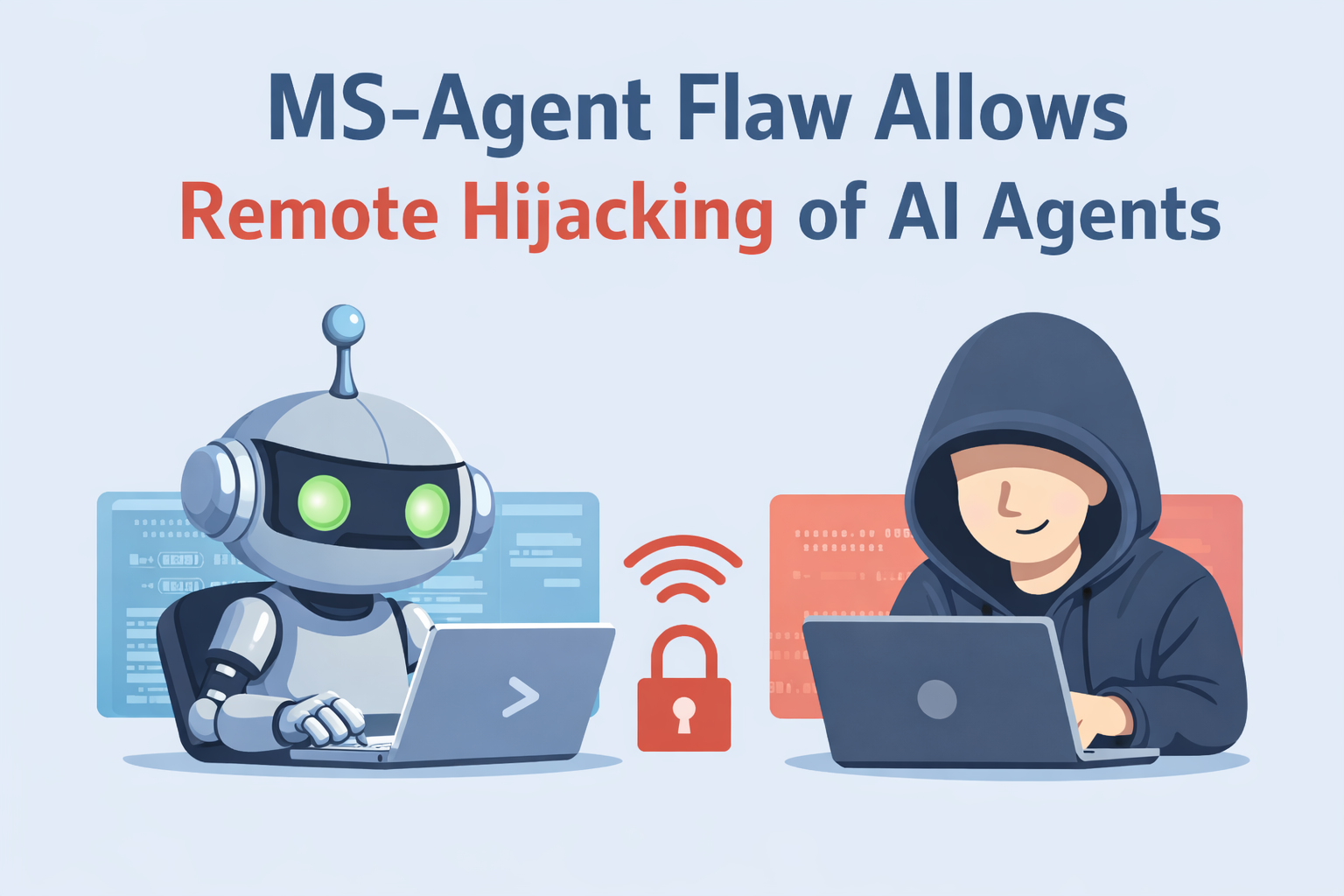
A serious security issue has been found in the MS-Agent framework. The flaw, tracked as CVE-2026-2256, allows attackers to take control of AI agents and potentially the entire system they run on.
What Is the Issue?
MS-Agent is a lightweight framework used to build autonomous AI agents. One of its built-in features is the Shell tool, which lets the agent run command-line instructions on the operating system.
While this makes the agent powerful, it also creates risk if commands are not properly checked before execution.
Vulnerability details:
- CVE ID: CVE-2026-2256
- Type: Command Injection / Remote Code Execution (RCE)
- Affected Software: ModelScope MS-Agent
- Vulnerable Component: Shell tool (check_safe() method)
How the Attack Works
The problem comes from how MS-Agent validates input. It uses a method called check_safe() that blocks dangerous commands using a denylist.
A denylist only blocks known bad words or patterns. Attackers can bypass this using prompt injection. They hide malicious commands inside normal-looking content such as:
- Documents the AI is asked to summarize
- Code the AI is asked to analyze
- Text that appears harmless
Because denylists can be tricked with alternate spelling, encoding, or different formats, harmful commands can pass through and get executed by the Shell tool.
What Attackers Can Do
If exploited, attackers can execute operating system commands with the same permissions as the MS-Agent process.
This may allow them to:
- Modify or delete system files
- Steal sensitive information
- Install malware or backdoors
- Use the compromised system to attack others
In severe cases, this could result in full system compromise.
Mitigation Steps
There is currently no official patch available. Organizations using MS-Agent should take immediate precautions:
- Deploy MS-Agent only in controlled environments
- Avoid processing untrusted input
- Run agents inside secure sandboxes
- Apply least-privilege access controls
- Replace denylist filtering with strict allowlist validation
Until a patch is released, isolation and strong input validation are essential.
Follow Us on: Linkedin, Instagram, Facebook to get the latest security news!
About the Author