FHN
FHN 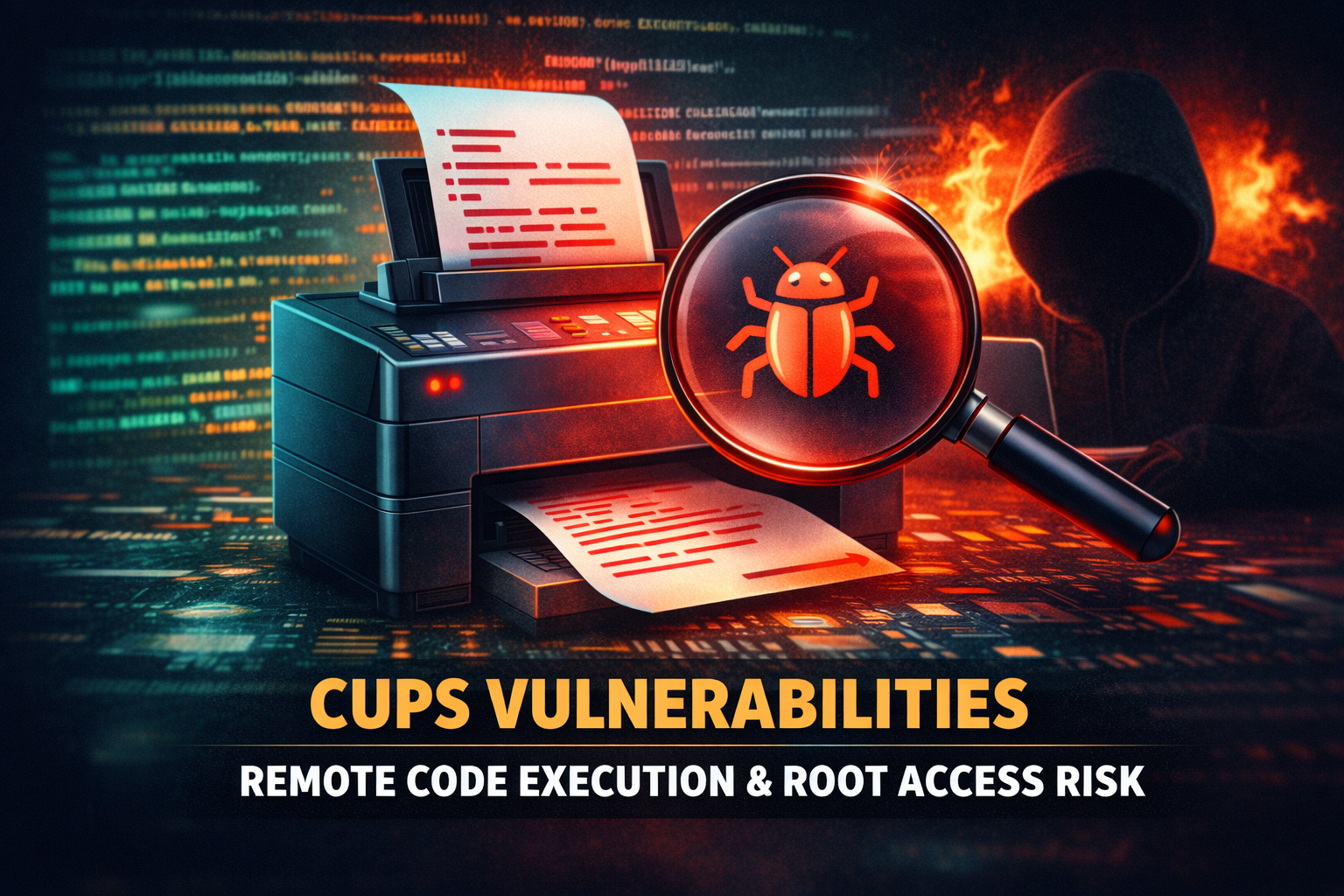
The widely used CUPS printing system has been found to contain critical vulnerabilities that could allow attackers to execute code and potentially gain full control over affected systems.
Since the print scheduler operates with elevated privileges, it becomes an attractive target for exploitation, especially in environments where print services are exposed over a network.
Remote Code Execution Risk
One of the identified issues enables attackers to execute code remotely on systems that expose shared print queues without authentication. The flaw originates from improper handling of print job inputs, where specially crafted data can bypass validation checks.
By injecting malicious input into print job parameters, an attacker can manipulate how the system processes configurations. This can result in the execution of unauthorized programs through the print service, effectively giving attackers control over the affected machine under the print service context.
This risk is particularly concerning for systems that allow anonymous access to shared printers, as it removes a key barrier to exploitation.
Privilege Escalation to Root
A second vulnerability allows local users with minimal privileges to escalate their access to full system control. This attack leverages weaknesses in how temporary printers are created and validated within the system.
An attacker can trick the system into granting elevated privileges during the printer setup process, then exploit a timing gap to redirect operations toward sensitive system files. By doing so, they can overwrite critical files and gain root-level access.
This type of attack is especially dangerous because it works even in default configurations, meaning no special setup is required beyond initial access to the system.
Security Recommendations
While fixes are in progress, organizations should take immediate precautions. Disabling external access to print services can significantly reduce exposure. Where shared printing is necessary, enforcing authentication is essential.
Additionally, running the print service within security frameworks such as AppArmor or SELinux can help contain potential damage by limiting what the service is allowed to access or modify.
About the Author