FHN
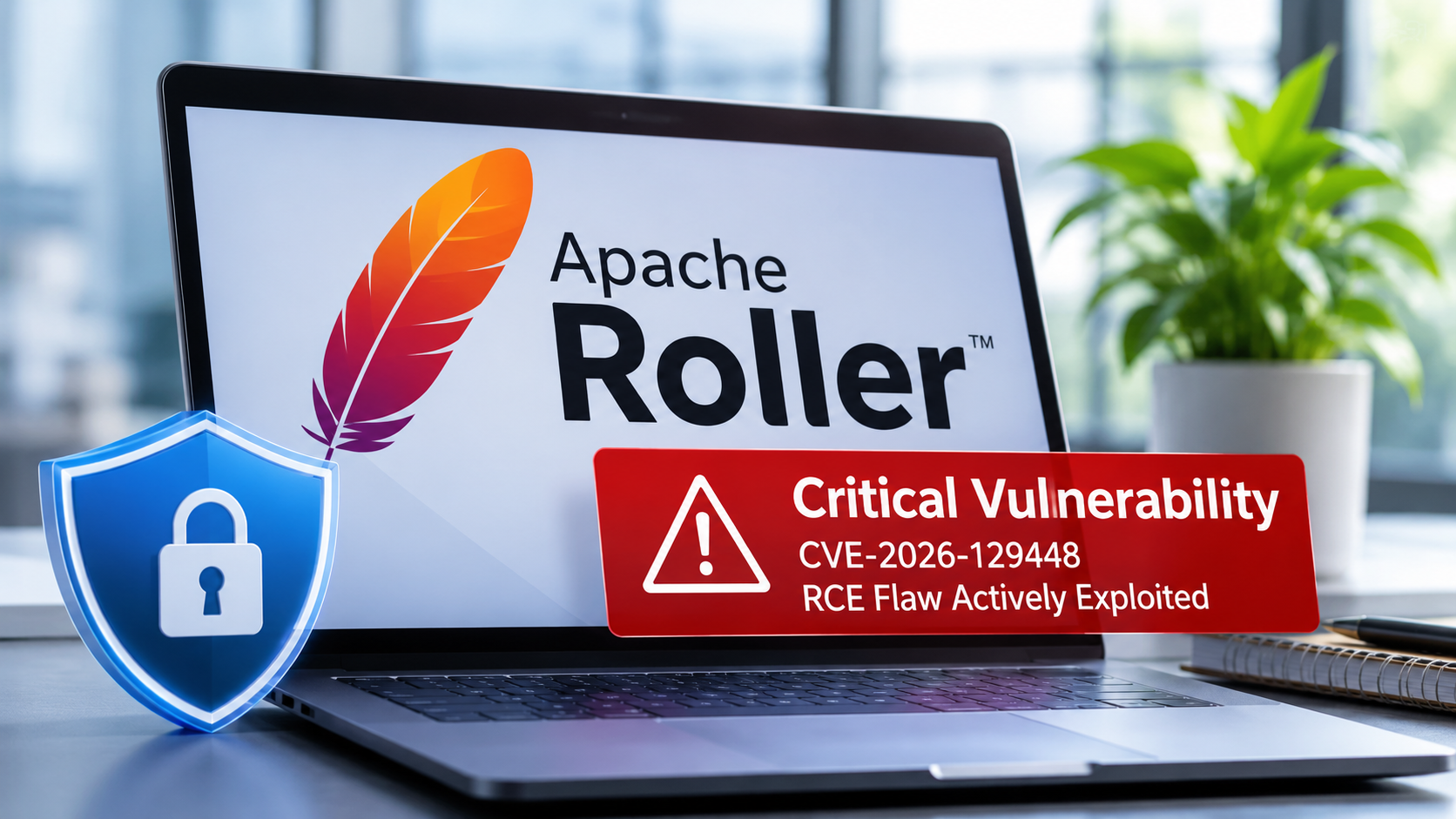
The Apache Software Foundation has warned that attackers are actively exploiting a critical remote code execution (RCE) vulnerability in Apache Roller, an open-source, Java-based blogging platform. The flaw could allow unauthenticated attackers to execute arbitrary code on vulnerable servers.
Tracked as CVE-2026-129448, the vulnerability carries a CVSS score of 9.8 and affects Apache Roller versions 4.0.0 through 6.1.4. Apache has released security updates and is urging administrators to upgrade immediately.
The warning is particularly significant because exploitation has already been observed in the wild, although Apache has not disclosed the attackers’ identities, the number of affected servers or the full details of the ongoing attacks.
Technical Details of CVE-2026-129448
The vulnerability originates from insecure deserialization of untrusted data in Apache Roller’s XML-RPC endpoint.
The endpoint accepts vendor extension types and deserializes incoming data before authenticating the requester. This processing order creates an opportunity for unauthenticated remote attackers to submit specially crafted requests and execute arbitrary code on the affected server.
The vulnerability can be exploited over a network without requiring valid credentials or user interaction.
Key vulnerability details:
- CVE ID: CVE-2026-129448
- CVSS Score: 9.8 (Critical)
- Vulnerability Type: Insecure Deserialization
- Affected Product: Apache Roller
- Affected Versions: 4.0.0 through 6.1.4
- Attack Vector: Network
- Privileges Required: None
- User Interaction: None
- Potential Impact: Remote Code Execution
Apache has clarified that this is the same underlying vulnerability previously tracked as CVE-2026-82384, which initially listed only Apache Roller 6.1.5 as affected. The newer advisory expands the affected version range and confirms active exploitation.
Attackers Exploiting the Vulnerability
Apache has explicitly confirmed that CVE-2026-129448 is being actively exploited in real-world attacks.
However, the organization has not yet published technical details about the observed exploitation activity, identified the responsible threat actors or confirmed how many systems have been compromised.
The unauthenticated nature of the vulnerability increases its exposure risk, particularly for Roller deployments accessible from the internet.
Successful exploitation could give attackers the ability to execute commands on vulnerable servers, potentially enabling further compromise depending on the privileges of the application process and the surrounding environment.
Apache Releases Security Updates
Apache recommends upgrading affected installations to Apache Roller 6.1.6 or later.
The updated release disables the vulnerable extension types and rejects malicious XML-RPC requests when the XML-RPC feature is disabled.
Administrators who cannot immediately upgrade should apply Apache’s temporary mitigation measures:
- Restart the Apache Roller application after applying the configuration change.
- Set
enabledForExtensionstofalseinWEB-INF/web.xml. - Alternatively, remove the
/roller-services/xmlrpcservlet mapping.
About the Author