FHN
FHN 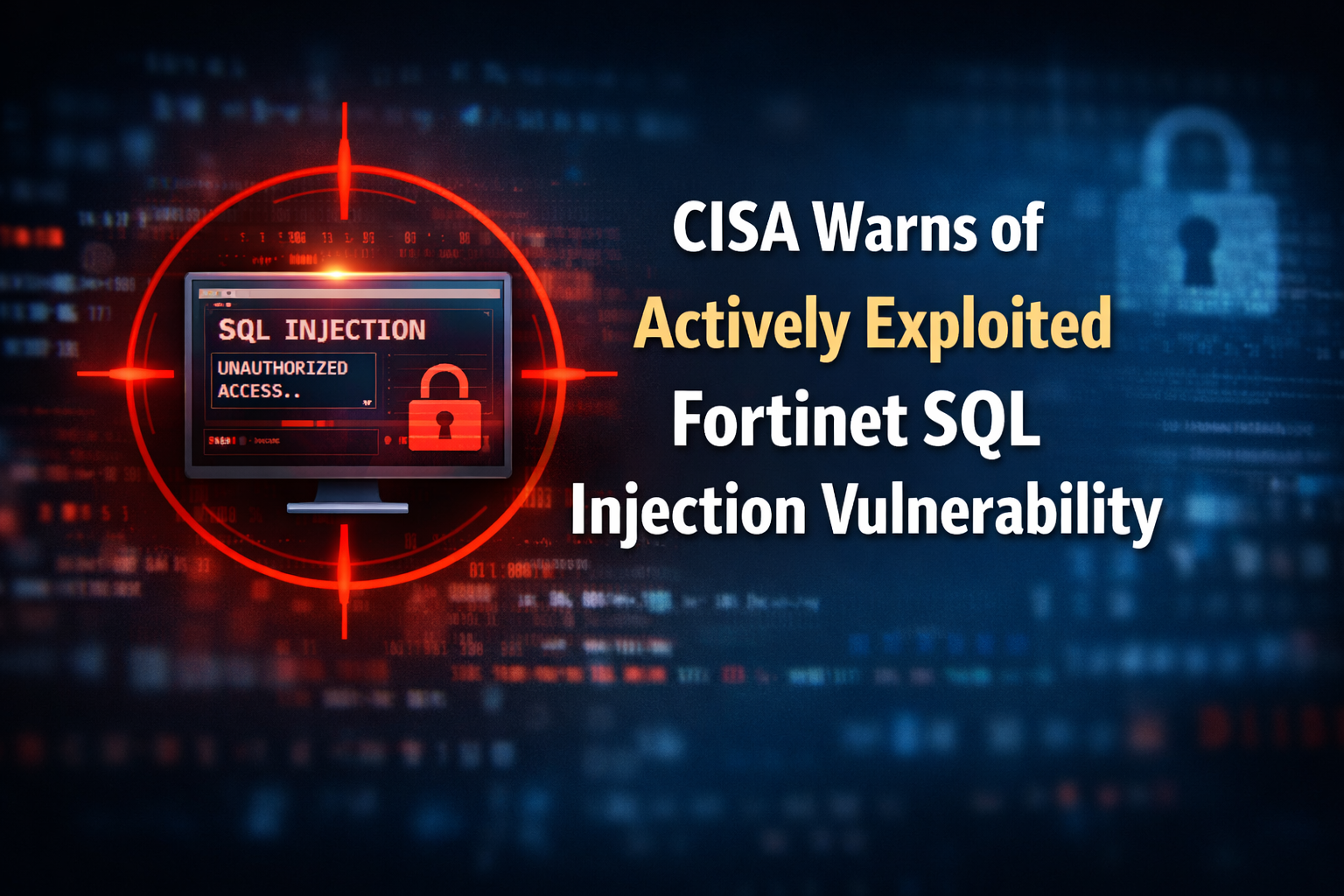
The Cybersecurity and Infrastructure Security Agency (CISA) has issued a high-priority warning that demands immediate attention from security teams across industries. A critical vulnerability affecting Fortinet products is now being actively exploited in the wild, significantly increasing the risk to exposed enterprise environments.
On April 13, 2026, the vulnerability identified as CVE-2026-21643 was officially added to CISA’s Known Exploited Vulnerabilities (KEV) catalog. This inclusion is not routine—it signals confirmed attacker activity and indicates that exploitation is no longer theoretical. Threat actors are already leveraging this weakness to target organizations, making immediate remediation critical.
Understanding the Vulnerability
The flaw exists in FortiClient Enterprise Management Server (EMS), a centralized platform used by organizations to manage endpoint security, enforce policies, and monitor device compliance. Because EMS sits at the core of endpoint control, any compromise can have far-reaching consequences across the entire network.
Technically, this issue is classified as a SQL injection vulnerability (CWE-89). It arises when user-supplied input is not properly validated before being processed by the backend database. Attackers can exploit this weakness by sending specially crafted HTTP requests that manipulate database queries and execute unintended commands.
What elevates the severity of this vulnerability is its unauthenticated nature. An attacker does not need valid credentials or prior access to the environment. If the EMS instance is exposed to the internet, it becomes a direct target. By simply interacting with the vulnerable interface, an attacker can execute arbitrary commands on the system.
Real-World Risk and Exploitation Impact
The ability to execute code remotely without authentication places this vulnerability in the highest risk category. Once exploited, attackers can gain control over the EMS server, which often acts as a central authority for endpoint devices within an organization.
This level of access can enable attackers to move laterally across the network, deploy malicious payloads, manipulate endpoint configurations, or establish persistent backdoors. In many environments, EMS servers are trusted systems, which makes them an ideal pivot point for deeper compromise.
Although there is no confirmed evidence yet linking this vulnerability to ransomware campaigns, the attack pattern aligns closely with how ransomware operators typically gain initial access. Vulnerabilities that allow remote execution without authentication are frequently weaponized early in attack chains.
Why Immediate Action Is Critical
CISA’s KEV listing is a clear indicator that organizations cannot afford delays. The window between public disclosure and widespread exploitation is often extremely short, and in this case, that window has already closed.
Organizations should treat this as an active incident risk rather than a routine patching task. Security teams are strongly advised to prioritize this vulnerability above regular update cycles and respond with urgency.
- Apply the latest Fortinet security patches immediately
- Review system and application logs for unusual or malformed HTTP requests
- Monitor for signs of unauthorized access or unexpected command execution
- Follow all mitigation guidance provided by Fortinet
- Disable or isolate affected systems if patching cannot be completed right away
Under Binding Operational Directive 22-01, U.S. federal agencies are required to remediate this vulnerability by April 16, 2026. This aggressive timeline reflects the severity of the threat and should serve as a benchmark for private organizations as well.
Final Thoughts
This vulnerability highlights a recurring issue in modern enterprise security—critical systems exposed to the internet without sufficient protection layers. When combined with an unauthenticated exploit, even a single overlooked patch can lead to full-scale compromise.
Organizations that rely on Fortinet EMS must act immediately, not only to patch the vulnerability but also to validate that their systems have not already been targeted. Proactive monitoring, rapid patching, and strict access controls remain essential in defending against threats of this nature.
In the current threat landscape, speed is not just an advantage—it is a necessity.
Follow Us on:Linkedin, Instagram, Facebook to get the latest security news!
About the Author