FHN
FHN 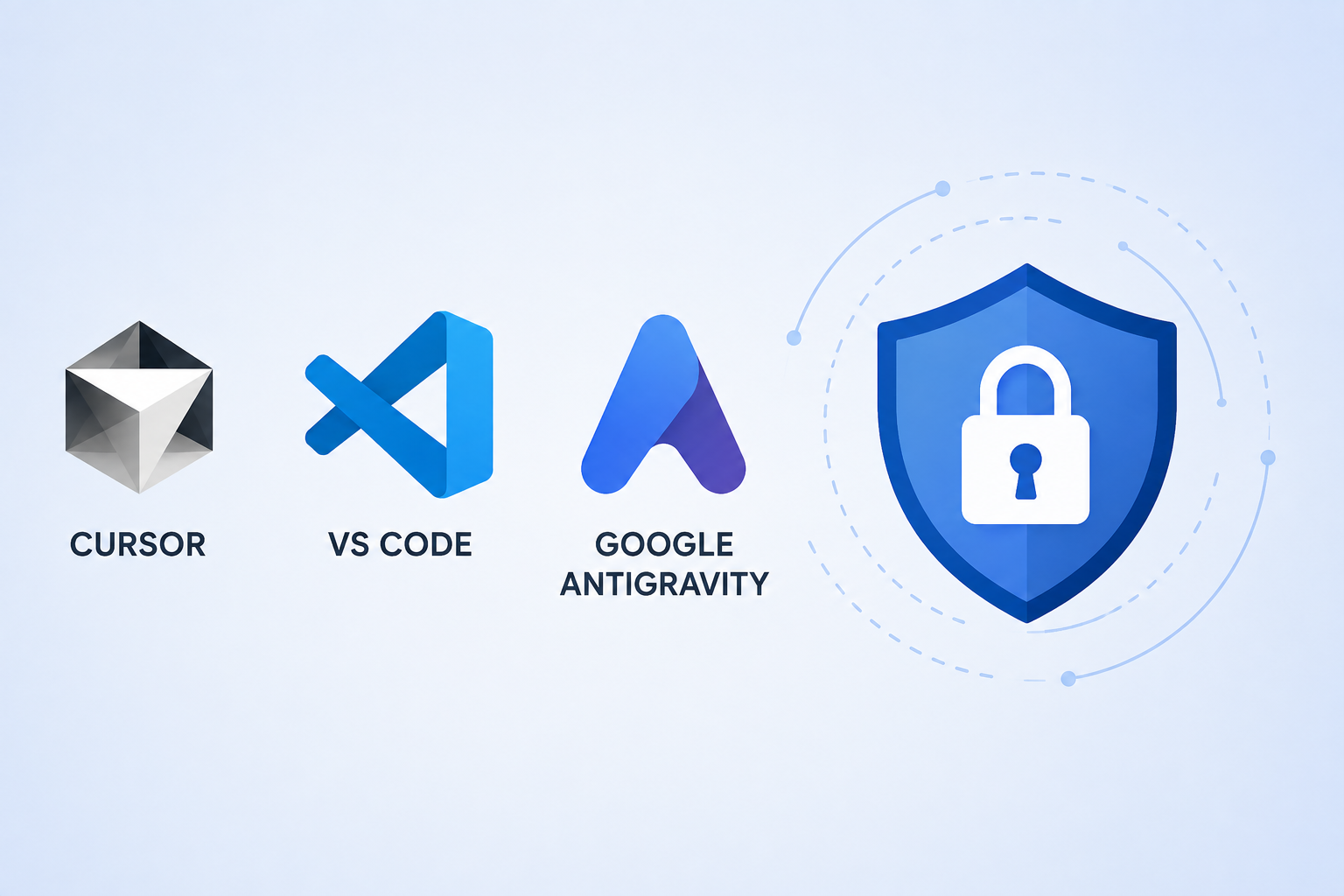
A recently patched security vulnerability exposed three popular code editors—Microsoft VS Code, Cursor, and Google Antigravity—to a serious remote code execution (RCE) risk.
According to security researchers at AISLE, the flaw could have allowed attackers to compromise a developer’s system simply by convincing them to click a malicious link embedded in a Git commit message.
The issue has now been fixed across all affected platforms, but it highlights the growing security risks facing modern AI-powered development tools.
How the Attack Worked
The vulnerability relied on a malicious link hidden inside a Git commit message.
If a developer clicked the link while viewing the commit inside one of the affected editors, arbitrary code could run automatically with the same permissions as the developer.
The attack required only a single click and did not display any warning, confirmation message, or security prompt, making the compromise difficult to notice.
What Attackers Could Do
Successful exploitation could have given attackers extensive control over a developer’s machine.
Potential impacts included:
- Stealing API keys and other sensitive credentials.
- Installing malware or keyloggers.
- Accessing, modifying, or deleting local files.
- Maintaining persistent access even after the editor was closed.
Because the malicious activity could remain hidden, developers might not realize their systems had been compromised.
Vulnerability Found Across Multiple Editors
AISLE first discovered the flaw in Microsoft VS Code during security testing in late 2025.
Since Cursor is built on the VS Code codebase, it inherited the same vulnerability. Later, researchers identified the identical issue in Google Antigravity, another AI-assisted coding environment based on the same architecture.
The discovery shows how a single vulnerability in a shared codebase can spread across multiple developer tools used by millions of people.
Vendors Released Security Fixes
After receiving responsible disclosure reports, all three vendors addressed the issue.
- Cursor released a security update shortly after notification.
- Google patched the vulnerability in Antigravity within days.
- Microsoft later released a fix for VS Code.
Current versions of all three editors are no longer affected.
Why This Matters
Many modern AI coding tools are developed using common open-source foundations such as VS Code. While this speeds up development and feature delivery, it also means a single security flaw can impact multiple products simultaneously.
This incident demonstrates the importance of continuous security testing and timely patch management, particularly for AI-powered development environments.
What Developers Should Do
Developers and organizations should take the following steps:
- Update VS Code, Cursor, or Google Antigravity to the latest version.
- Review recent Git activity for anything suspicious.
- Rotate API keys and credentials if older vulnerable versions were used.
- Monitor developer systems for unusual behavior or unauthorized access.
Keeping development tools fully updated and regularly reviewing credentials can help reduce the risk of future software supply chain attacks.
About the Author