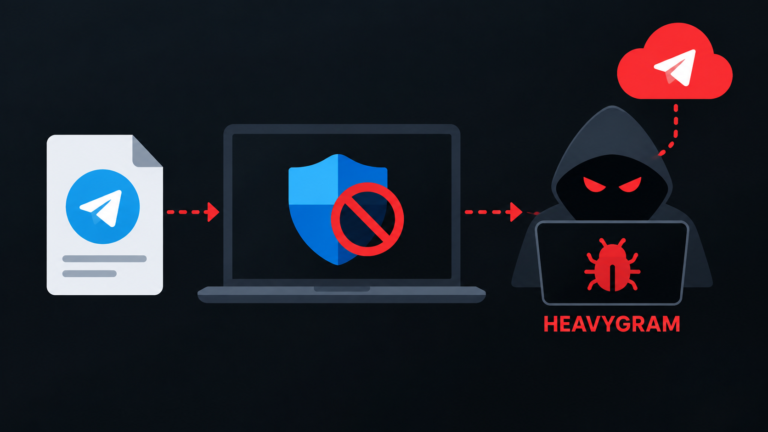
Critical GreatXML Vulnerability Enables Windows BitLocker Bypass via Recovery Partition XML Files
 FHN
FHN 
A newly disclosed Windows security vulnerability known as GreatXML has raised concerns among cybersecurity professionals. The exploit allows attackers to potentially bypass Microsoft BitLocker by abusing XML files stored within the Windows Recovery Environment (WinRE) recovery partition. Researchers found that files created by Microsoft Defender Offline Scan can be manipulated to obtain a SYSTEM-level command shell while the device is in recovery mode.
The issue is significant because BitLocker is widely used by enterprises and government organizations to protect sensitive data. If exploited successfully, attackers could gain access to encrypted information without requiring the BitLocker recovery key, reducing the effectiveness of one of Windows’ most important security controls.
How It Works
The GreatXML exploit reportedly abuses the way Windows Recovery Environment processes configuration files during recovery operations. Researchers observed that specially crafted XML files, including an unattend.xml file and modified recovery configuration files, can be placed within the recovery partition.
When the affected system enters Recovery Mode, these files are processed automatically. Instead of loading the expected recovery interface, the manipulated configuration may trigger a command shell running with elevated SYSTEM privileges, granting access to the unlocked BitLocker-protected volume. The exploit appears to leverage trusted recovery mechanisms rather than traditional memory corruption or kernel vulnerabilities.
The Attack Chain Can Involve
1. Initial Device Access
- Physical access to a workstation or laptop.
- Administrative access obtained through another compromise.
2. Recovery Partition Modification
- Placement of malicious XML files within the recovery partition.
- Modification of recovery configuration settings.
3. Privilege Escalation
- Launch of a SYSTEM-level command shell.
- Access to BitLocker-protected storage.
4. Data Access and Collection
- Viewing sensitive files.
- Extraction of credentials and corporate information.
- Offline forensic evasion activities.
Multiple Other Methods Threat Actors May Use
Although GreatXML focuses on recovery partition XML files, attackers frequently target BitLocker through additional techniques, including:
- indows Recovery Environment abuse
- Boot Manager manipulation
- Privilege escalation vulnerabilities
- Offline disk analysis after system theft
Modern attackers often combine multiple vulnerabilities to increase the likelihood of success and evade detection.
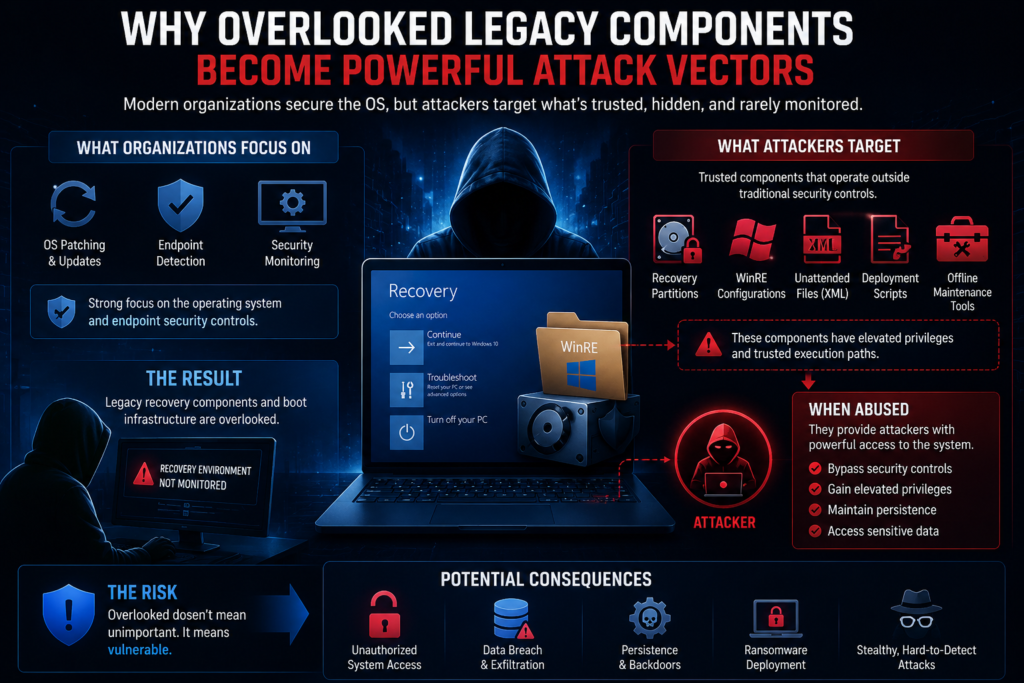
Why Legacy Components Remain a Risk
Many organizations focus heavily on operating system patching and endpoint detection while overlooking legacy recovery components and boot infrastructure. Recovery partitions, WinRE configurations, deployment scripts, unattended setup files, and offline maintenance tools often receive less monitoring than standard system files.
Attackers increasingly target these trusted components because they operate outside traditional security controls. Since recovery environments are designed to help administrators regain access to systems, they frequently possess elevated privileges and trusted execution paths. When abused, these features can become powerful attack vectors.
Security Experts Recommend That Organizations
To reduce exposure to GreatXML and similar recovery-environment attacks, security teams should:
Harden BitLocker Deployments
- Enable TPM + PIN authentication.
- Enforce strong recovery key management.
- Monitor BitLocker policy compliance.
Secure Recovery Environments
- Restrict unauthorized access to WinRE.
- Monitor changes to recovery partitions.
- Audit recovery-related files and configurations.
Maintain Patch Management
- Apply Microsoft security updates promptly.
- Track new advisories related to BitLocker, WinRE, and Defender Offline Scan.
- Review recovery partition configurations after major updates.
The GreatXML vulnerability serves as a reminder that encryption alone does not guarantee complete protection. Recovery environments, boot processes, and trusted system components can become attractive targets for attackers seeking to bypass traditional security controls. Organizations should adopt a layered security strategy that includes BitLocker hardening, recovery environment monitoring, physical security controls, and continuous threat detection to reduce the risk of compromise.
About the Author