FHN
FHN 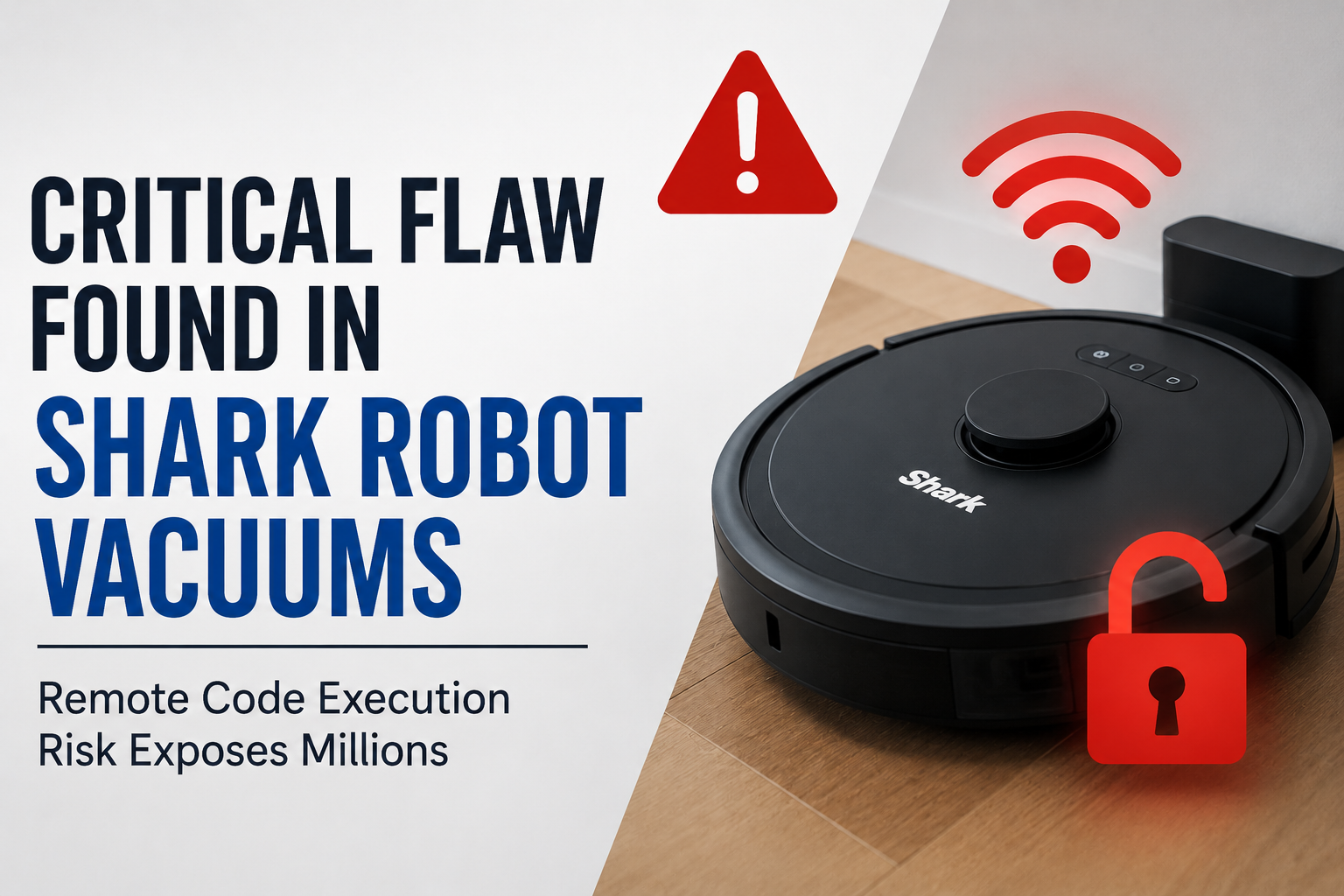
A newly disclosed security vulnerability could put millions of internet-connected Shark robot vacuums at risk. According to security researchers, the flaw could allow attackers to remotely execute commands, access sensitive device data, and potentially take control of affected vacuums.
The vulnerability is linked to insecure cloud permissions and a built-in command execution feature found in certain Shark vacuum firmware. At the time of disclosure, no official patch had been released.
How the Vulnerability Works
Researchers found that the issue affects internet-connected Shark robot vacuums that communicate through AWS IoT services. By exploiting weak cloud permissions, an attacker who gains access to one vulnerable device could potentially interact with other Shark vacuums connected to the same cloud environment.
The most serious concern is a command execution feature that allows specially crafted messages to run commands on the device. During testing, researchers successfully demonstrated that credentials taken from one Shark vacuum could be used to execute commands on another compatible device.
Some Shark models also include cameras and store household maps for navigation. Researchers warned that a successful attack could allow unauthorized access to:
- Live camera feeds on supported models
- Home mapping data
- Stored Wi-Fi credentials
- Remote control of the vacuum
- Device information and telemetry
The research also identified a large number of active Shark devices communicating with the affected cloud infrastructure, indicating that the potential impact could be significant.
Recommended Security Measures
Until an official fix is released, Shark robot vacuum owners should take steps to reduce their exposure.
Recommended actions include:
- Keep the vacuum firmware updated with the latest available version.
- Monitor SharkNinja for future security updates and advisories.
- Place smart home and IoT devices on a separate Wi-Fi network whenever possible.
- Regularly review your home network for unknown or suspicious devices.
- Remove unused smart devices from your network.
- Change your Wi-Fi password if you suspect unauthorized access.
This vulnerability highlights the growing importance of securing Internet of Things (IoT) devices. As more connected devices become part of everyday life, regular updates, network segmentation, and strong security practices remain essential for protecting home networks and personal data.
About the Author